A major milestone in the Artemis program has been achieved: NASA Orion spacecraft has successfully completed its first crewed mission, paving the way for upcoming exploration missions. At TTTECH, we are proud to contribute to NASA Orion and its European Service Module (ESM) with TTEthernet® products and technology that are used in the avionics system and the data network connecting all control and life support systems on the spacecraft and its service module.
In advanced space exploration international collaboration is key, especially for programs as complex as NASA Artemis. The Orion spacecraft is built jointly by NASA and ESA. It is a successor to both the Space Shuttle and the spacecraft of the Apollo era in terms of function and design. TTTECH Aerospace has been working on the avionics of this spacecraft together with Honeywell Aerospace, Lockheed Martin, and NASA, since 2006.
European supplier to the Orion program
In the early 2000s, the European Space Agency (ESA) and the European space industry began to deepen international cooperation, especially with the USA and NASA, which also brought a new dynamic to the market for smaller companies and start-ups like TTTECH.

“TTTECH has been working on advanced networking technology which is needed to perform missions with highest safety and security requirements. This was key for NASA and their partner Lockheed Martin since they were able to integrate multiple safety- and mission-critical functions on the same electronic control system without interference saving lots of size, weight, and power while at the same time offering more advanced features. Orion was the starting point to build up our space product portfolio and compliment the TTP-portfolio we’d developed for the aviation sector,” says Christian Fidi, General Manager, TTTECH Aerospace.
TTTECH had the chance to join the Orion program thanks to its established collaboration with Honeywell Aerospace in the aviation sector which began in 2000 and used Time-Triggered Architecture mainly in aircraft engine control (“FADEC”).
Honeywell Aerospace was the supplier of the Orion avionics and familiar with TTTECH’s technology solutions for safety- and mission-critical data communication. Lockheed Martin, the prime contractor for the Orion spacecraft, together with NASA selected the proposed Time-Triggered Ethernet avionics solution. TTTECH supplied TTEthernet networking IP to Honeywell and integrated them into Orion’s Onboard Data Network.
NASA signed a Space Act Agreement with TTTECH in 2009 for the further development of Time-Triggered Ethernet, which resulted in the standardization of Time-Triggered Ethernet in SAE AS6802.
After the standardization of Time-Triggered Ethernet in AS6802, TTEthernet was baselined for Artemis missions in 2019 under the International Avionics Systems Interoperability Standards (IASIS) by NASA and its international partners. In 2021, Europe followed with the publication of the ECSS-E-ST-50-16C standard, thus formalizing Time-Triggered Ethernet as fully synchronized data backbone for spacecraft.
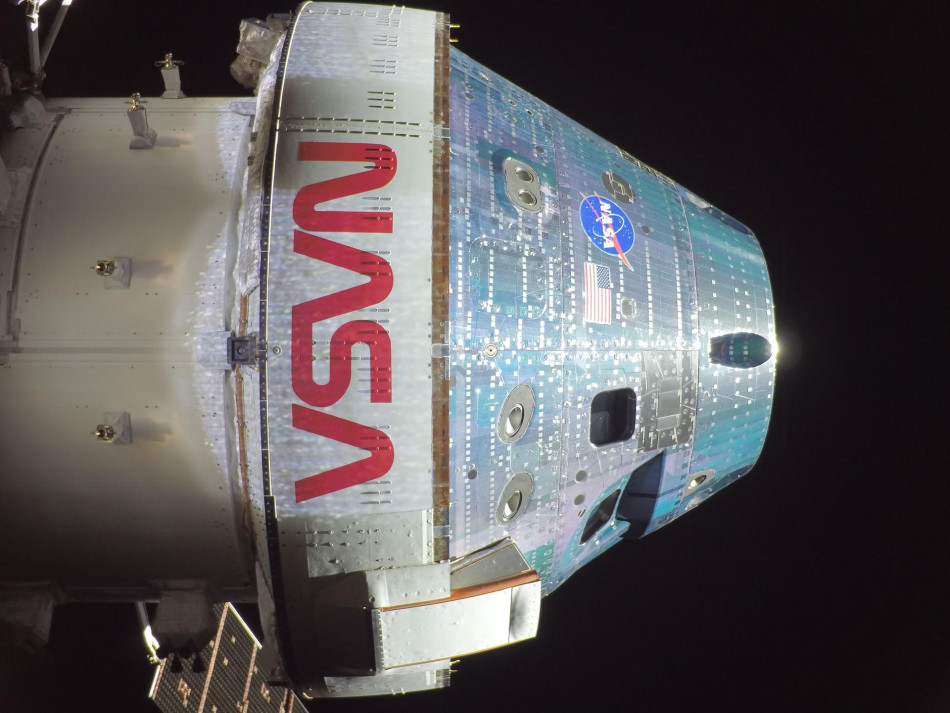
Orion as a steppingstone for the expansion of TTTECH’s technology and product portfolio
The first milestone in the Orion program was a test flight (EFT-1) in 2014, which was completed successfully. A few years later, Orion was selected for use in the Artemis program. The first flight under NASA Artemis was an uncrewed mission in November/December 2022, which tested Orion and its companion, the European Service Module (ESM), which is being provided by ESA. Built by Airbus, it powers the spacecraft and provides fuel, water, oxygen, and nitrogen during the mission. A year later, TTTECH joined the technical discussions related to interoperability within the Artemis program, where the docking of Orion to the Lunar Gateway and the connectivity and integration into the space stations larger data network were being prepared.
TTTECH’s technology is integrated into the ESM through a collaboration with Airbus. TTTECH supplied its commercial off-the-shelf (COTS) development and test equipment for the TTEthernet network and supported Airbus during the network integration in the ESM. The availability of COTS equipment was a benefit for Airbus and, a few years later, was also crucial for the selection for the Ariane 6 program. Back then, Austria did not contribute to ESA’s human spaceflight initiatives, thus marking this project as a steppingstone into this domain, forwarded by industrial cooperation in Europe.
Christian Fidi confirms: “In the space sector, we have achieved several big milestones. Orion was the door opener that allowed our technology to be developed into an international standard used in different sectors – from aerospace to automotive and critical infrastructure. It also led to what we call our ‘breakthrough space project’ – Ariane 6, followed by lots of other groundbreaking space programs in the governmental and New Space market reaching from launchers to satellites to exploration.”
TTEthernet technology has thus become part of some of the highest profile international space programs, providing high reliability in data communication for fail-safe, safety-critical applications, and it allows interoperability and scalability in large networks. It allows to connect a wide range of independent systems on the spacecraft, space station, or launcher, like a “central nervous system”.
It is based on standard Ethernet but adds a deterministic component to ensure reliable transfer of critical data within the network. It also allows for several traffic classes based on international standards (standard Ethernet according to IEEE 802.3, rate-constrained traffic according to ARINC 664 part 7, and Time-Triggered Ethernet according to SAE AS6802) to use the same physical network in parallel without interference and with its fault-tolerant clock synchronization ensures guarantee of service and fail-operationality.
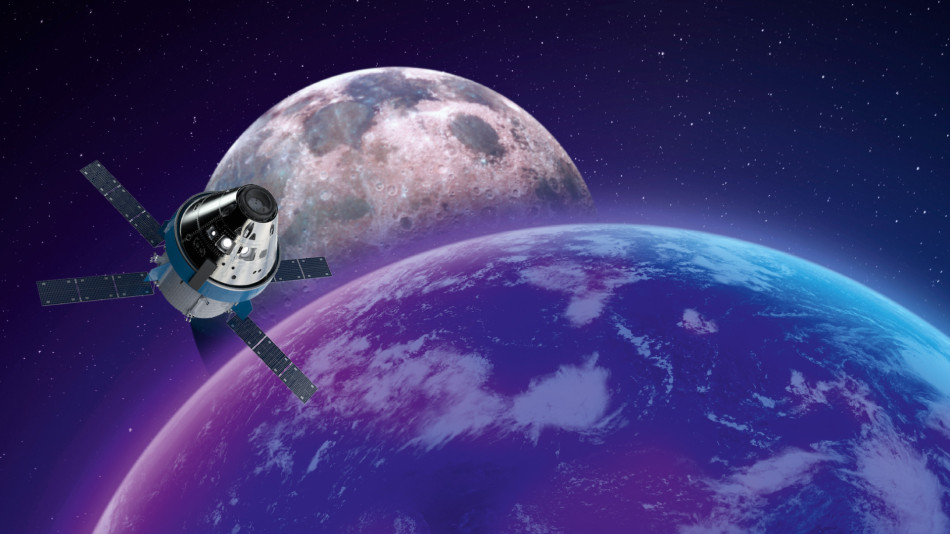
What’s on the horizon in the coming years
Space remains a growth market for TTTECH says Christian Fidi: “Lunar exploration offers a lot of business potential with upwards of 250 missions in the next ten years. We are now able to offer an open, certifiable platform for safety- and mission-critical systems for LEO and deep space in compliance with NASA’s and ESA’s highest safety standards. In addition, we are making great progress on our higher speed (10 Gbit/s and higher) as well as TSN and IP routing offering. Therefore, we’re seeing great opportunities to contribute to new programs and projects like the Moon Base, the commercial LEO stations as well as satellite platform and payloads.”
Read and view more
- TTTECH Aerospace’s NASA Orion case study
- NASA CAPCOM (spacecraft communicator) at TTTECH
- Lunar Gateway reference page
- TTTECH on board for Artemis I mission
- TTTECH on board for Artemis II mission
- From aerospace to energy: The formative years of TTEthernet
- Artemis II’s long countdown – a space historian explains why it has taken over 50 years to return to the Moon
